Vol. 24, Issue 8, Nov. 12, 2026
Whether we wish we’d never heard of AI, or we’re singing its praises because it’s helping us accomplish more in less time, or we’re even doing things we never imagined possible, there’s no question — it’s here to stay. I’ll admit I’m in the ‘doing things I never imagined’ camp (some weekends, a little too much!). Beyond the data center controversies and doomsday headlines, our workdays go on. So how are we going to get along — with AI, and with each other?
And, importantly, how is AI affecting human health and well being? There are many sides to that question. Since so many of our waking hours are spent at work, I’m focusing today on one: how is AI affecting us humans in the workplace?
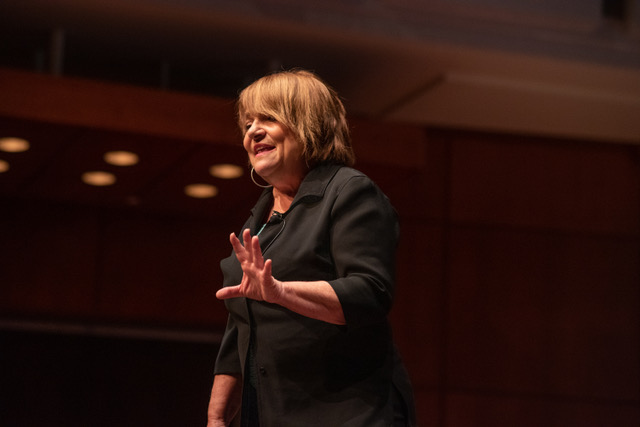
For answers, I turned to a speaker I highly respect — Karen McColl ough, CSP, a generational dynamics and workplace behavior expert. She’s super smart and relatable, and she brings lots of humor to her talks. She’s someone who truly LOVES her work and loves learning. So when AI came along, she dove right in. And, learning, as we’ll see in Karen’s own words below, is one of the keys to succeeding in the age of AI.
I should say up front — the ideas in this post are all Karen’s. I’m learning from her, right along with you.
First Comes Fear
Every generation has had to adapt to something that changed the way we work. Fax machines. Computers. Email. Smartphones. Remote work. Social media. Zoom. And now, AI. But Karen points out that this change is different — AI isn’t just changing how we work, it’s doing some of the work — our work — for us. So the question becomes: what work will I do, and how will I contribute if AI is doing my job — or even part of it?
“I’ve been talking about change and the generations for a long time,” Karen says. “And here is something I’ve learned: Change almost always creates fear before it creates possibility.
“When change comes along, our first reaction is often resistance. We worry about what we might lose, what we’ll have to give up, or what we’ll have to learn. But once we get pas t that initial reaction and start getting curious, we begin to see the possibilities. “Instead of asking, ‘What is this change going to do to me?’ we start asking, ‘What can I do with it?’”
You probably remember when people were afraid that computers would eliminate jobs. Then email arrived and changed our communications. The smartphone put a computer in our pocket. Social media changed marketing, recruiting, customer service, and even how we build relationships.
Every one of those changes eliminated certain tasks, created new ones, and forced us to learn — even to rethink what our jobs were — and opened up new possibilities.
“AI is doing the same thing — only much faster,” Karen notes. “And I think it’s the speed of it all that makes this one feel scary.”
Change, Stress, and Our Well Being
There’s another side to all this change that we don’t talk about enough: our own well being.
When we’re constantly trying to keep up, learn something new, and wonder what the future holds, it can be exhausting, even discouraging, to be haunted by the fear of the unknown: Will my job still exist? Will I be able to keep up? Am I falling behind?
Those questions create stress. And our stress affects how we think, communicate, make decisions, and treat one another.
“I’ve spent years helping audiences understand that we don’t always get to choose the changes happening around us,” Karen says. “But we do have a choice in how we respond.
“And that’s where adaptability becomes so important. Adaptability isn’t just about learning the latest technology. It’s about managing our reactions, staying open to new ideas, and not allowing fear to make our decisions for us.
“Curiosity can change how we feel about what’s happening. Instead of getting overwhelmed by everything AI can do, why not start with one thing it could do for you?”
AI Is a Tool. Adaptability Is the Skill.
“The goal isn’t to compete with AI,” Karen says. “The goal is to learn what AI does well, use it, and then become even better at the things your organization still needs from you.”
A lot of those things are human.
• Judgment.
• Critical thinking.
• Curiosity.
• Communication.
• Emotional intelligence.
• Creativity.
• Resilience.
• The ability to read the room.
• The ability to build trust.
• The ability to deal with conflict.
• The ability to solve a messy problem when there isn’t one perfect answer.
And maybe one of the most important skills of all:
Recognizing when the answer AI gives you simply doesn’t make sense.
“AI can give you information, organize your thinking and ideas, and do it fast,” Karen says. “But it doesn’t know your customer the way you do. It doesn’t understand the history behind the disagreement in your department. It doesn’t know that the employee who seems disengaged is actually overwhelmed. It doesn’t know when the technically correct answer is completely wrong for the moment.”
Suddenly, We’re All Learning Something New
Karen tells her audiences that every generation has something to contribute:
• The Gen Z employee may be the first one willing to jump into a new AI tool and see what it can do.
• The Boomer may bring the context and judgment that comes from decades of experience.
• Gen X knows a thing or two about figuring things out.
• Millennials know how to connect, collaborate, and move through constant change.
“Every generation has something to teach,” Karen says, “and every generation has something new to learn. Maybe AI is giving us one more reason to stop judging each other and start getting curious about what we can learn from one another.”
And that brings well being benefits, too.
“Thin k about how much workplace stress comes from misunderstandings, assumptions, and feeling like nobody understands where you’re coming from,” she points out.
“When we help one another instead of judging one another, we build trust. People feel more comfortable asking questions, admitting what they don’t know, and trying something new. And that creates a healthier workplace.”
The Future Belongs to the Learners
“We need to take care of ourselves and one another as we figure out what comes next,” Karen says.
“The future doesn’t belong to the generation that knows the most about AI. It belongs to the people most willing to keep learning,” she concludes.
Karen is ready to share these thoughts and more in her talk on the topic, Generations, AI and the Future of Work: How Every Generation Can Learn, Adapt, and Contribute in the Age of AI.
This is a great topic for a corporate keynote, as well as for an employee resource group (ERG), multigenerational teams, leaders, and organizations navigating AI and a changing workplace.
Watch a video preview of Karen’s high-energy programs here.
If you’re planning a leadership retreat or all-staff event in 2027, I’d love to talk with you about whether Karen is the right fit. Call or email me and we’ll explore it.
Until next time, get curious about one new thing — and as always, take care of yourself for your well being and those you love.
Barbara

For Your Well Being is published with the intention of bringing you insider speaking reports, exclusive stories about special events around the country, meeting planner tips, and fun stuff from the worlds of health and well-being. Be well and be in the know!
The Speak Well Being Group is a specialized boutique speakers bureau, focusing on health and wellness for all types of organizations that want to foster health and well being for their employees, members, clients, and in their communities.
Our speakers are hand-selected. They are not only experts in their fields; they connect with their audiences while bringing them life-changing information, smiles of recognition, and ultimately a sense of well being and hope.Finding the perfect keynote speaker for your special event or conference is my personal passion, not just once, but year after year.
It brings me great joy to know that your audience was delighted and moved by the speaker we selected together. I’m committed to making the process easy, pleasant and fun.
